Growing Your Business Shouldn’t Cost You Your Peace
If you’ve ever ended a workday feeling like you accomplished a hundred small tasks but made very little meaningful progress, you’re not alone.
Running a business often feels like juggling dozens of responsibilities at once. You’re managing clients, responding to emails, overseeing finances, serving your team, handling operations, and somewhere in the middle of all of that, you’re expected to be a marketer too. Every expert seems to have a different opinion about what you should be doing. One says you need to post every day on social media. Another insists that email marketing is the key. Someone else tells you to focus on search engine optimization, while another encourages you to invest heavily in paid advertising.
The advice isn’t necessarily wrong.
The problem is that it often arrives without context.
Business owners begin collecting marketing tactics without understanding how those tactics fit together. Before long, they’re spending countless hours creating content, trying new platforms, reacting to trends, and constantly wondering whether they’re focusing on the right things.
Eventually, exhaustion sets in.
This kind of fatigue isn’t simply the result of working hard. Most entrepreneurs expect hard work. What they don’t expect is the constant mental weight of wondering whether they’re making the right decisions. Every marketing task becomes another item on an already overwhelming to-do list, and every new opportunity feels like something they can’t afford to ignore.
This is how marketing burnout begins.
At Oakes Creative House, we’ve discovered that burnout isn’t usually caused by a lack of motivation or ambition. It often stems from a lack of clarity. When there isn’t a clear strategy guiding your decisions, everything feels equally urgent. Every platform seems important. Every marketing trend feels like something you should be trying. Every day begins with the same question:
“What should I be doing today?”
A marketing roadmap changes that question entirely.
Instead of reacting to whatever feels most urgent, you begin working from a strategic plan. You know what deserves your attention, what can wait, and what doesn’t align with your goals at all. Marketing becomes less about constantly doing more and more about intentionally doing what matters most.
That’s the difference between staying busy and building sustainable business growth.
Why So Many Business Owners Feel Like They’re Always Marketing
One of the greatest ironies of entrepreneurship is that many business owners started their companies because they loved serving people, solving problems, or creating something meaningful. Very few began their journey because they wanted to spend hours planning social media content, analyzing website traffic, or keeping up with algorithm changes.
Yet somewhere along the way, marketing becomes a full-time responsibility layered on top of every other responsibility they already carry.
It starts innocently enough. A few social media posts each week. A newsletter every month. Updating the website when there’s time. Then someone suggests creating video content. Another person recommends blogging consistently. Soon, you’re trying to optimize your Google Business Profile, respond to online reviews, learn search engine optimization, build email automations, and understand analytics reports.
None of these activities are inherently bad. In fact, many of them are incredibly valuable.
The problem is that they’re often added one at a time without an overarching strategy.
Imagine building a house by purchasing materials every weekend without ever looking at a blueprint. You might buy excellent lumber, beautiful windows, and high-quality flooring, but without a plan, none of those pieces come together efficiently. Marketing works the same way. Every tactic has value, but only when it supports a larger objective.
Without that structure, marketing begins to feel endless.
There’s always another platform to join.
Another trend to explore.
Another expert to follow.
Another strategy to test.
Instead of feeling empowered by possibilities, business owners begin feeling buried by them.
The result isn’t just overwhelm.
It’s decision fatigue.
Every day requires dozens of small marketing decisions. What should you post? Which platform deserves your attention? Should you invest in SEO or paid ads? Is blogging still worth the effort? Should you redesign your website? Is your messaging clear enough? Are your competitors doing something you’re missing?
Individually, these questions seem manageable.
Collectively, they’re exhausting.
A marketing roadmap removes much of that mental burden by replacing constant decision-making with intentional direction. Rather than evaluating every new opportunity, you evaluate whether it supports the strategy you’ve already established.
That single shift creates remarkable freedom.
Marketing Burnout Isn’t About Working Too Hard
When people hear the word “burnout,” they often imagine someone working long hours with no days off.
While that can certainly contribute, burnout is frequently more complicated than simply working too much.
Many business owners don’t burn out because they’re busy.
They burn out because they’re constantly switching directions.
One week they’re focused on Instagram because engagement seems promising. The following week they’re convinced LinkedIn is the better opportunity. Then someone tells them blogging is essential for SEO. A podcast sounds like a good idea. Maybe YouTube should be next. Before long, they’re dividing their time across so many initiatives that none of them receive the consistency needed to produce meaningful results.
This cycle creates a constant feeling of falling behind.
No matter how much work gets done, it never feels like enough because there’s always another marketing task waiting.
Even worse, many entrepreneurs begin measuring themselves against businesses with completely different resources. They compare themselves to companies with full marketing departments while trying to execute the same strategies as a team of one or two people.
That’s an impossible standard.
A successful business growth strategy isn’t built around doing everything.
It’s built around doing the right things consistently.
When marketing lacks priorities, every task feels urgent.
When marketing has priorities, every task has purpose.
That distinction changes not only your results but also your relationship with your business.
Instead of feeling like marketing controls your schedule, you begin feeling like your strategy guides your decisions.
That’s one of the greatest gifts a marketing roadmap provides.
The Hidden Cost of Marketing Without a Plan
Most business owners recognize the financial cost of ineffective marketing.
They notice money spent on advertising that doesn’t convert.
They see subscriptions for software they rarely use.
They invest in campaigns that produce disappointing results.
Those costs are easy to identify because they appear on financial statements.
The emotional costs are much harder to measure.
Marketing without a clear plan quietly creates stress in ways that many entrepreneurs don’t immediately recognize. Every morning begins with uncertainty. Every week feels reactive. Every marketing decision carries unnecessary pressure because there’s no framework for evaluating what deserves attention first.
Over time, that uncertainty affects more than marketing.
It influences confidence.
When business owners don’t know whether their efforts are moving them closer to their goals, they naturally begin questioning themselves. They second-guess ideas they would have confidently pursued just a few years earlier. They hesitate to invest because they’re unsure what will produce results. They become increasingly cautious, not because they’re incapable, but because they’ve been operating without clear direction for too long.
This is one of the reasons so many businesses remain stuck despite working incredibly hard.
They’re investing enormous amounts of energy into marketing activities without first creating a strategic system to organize those activities.
A marketing roadmap changes that dynamic.
Rather than asking you to simply work harder, it asks a better question:
What is the highest-impact next step for your business right now?
Once that question has an answer, everything else begins to feel lighter.
Because clarity reduces complexity.
And complexity is one of the biggest contributors to marketing burnout.
What a Marketing Roadmap Actually Changes
Many people think a marketing roadmap is simply a list of recommendations or a timeline for completing marketing projects. While it certainly provides direction, it’s much more valuable than a checklist. A marketing roadmap creates structure, and structure is often the missing piece for businesses experiencing marketing burnout.
Without a roadmap, marketing decisions tend to be reactive. Business owners respond to the latest trend, the newest platform, or whatever challenge feels most urgent that day. One week the focus is social media. The next it’s redesigning the website. Then attention shifts to SEO, followed by email marketing, paid advertising, networking events, or launching another new initiative.
The problem isn’t that these activities are unimportant. The problem is that they’re often pursued without understanding how they fit together. As a result, marketing becomes a collection of disconnected tasks instead of a coordinated strategy.
A marketing roadmap changes that by creating a clear sequence. Rather than asking what to do next every morning, you already know your priorities. Every decision supports a larger objective, and every marketing activity builds upon the work that came before it. Instead of feeling like you’re constantly starting over, your efforts begin to compound.
This shift is incredibly powerful because it replaces uncertainty with confidence. You stop wondering if you’re missing something important because you have a framework guiding your decisions. Your marketing becomes intentional rather than impulsive, allowing you to focus your energy where it will have the greatest impact.
Perhaps the biggest transformation isn’t in your marketing at all—it’s in your mindset. When you know where you’re going and why you’re taking each step, the constant pressure to “do more” begins to disappear. You recognize that growth isn’t created by checking every marketing box. It’s created by making the right decisions in the right order.
How Each Phase of the Marketing Roadmap Reduces Burnout
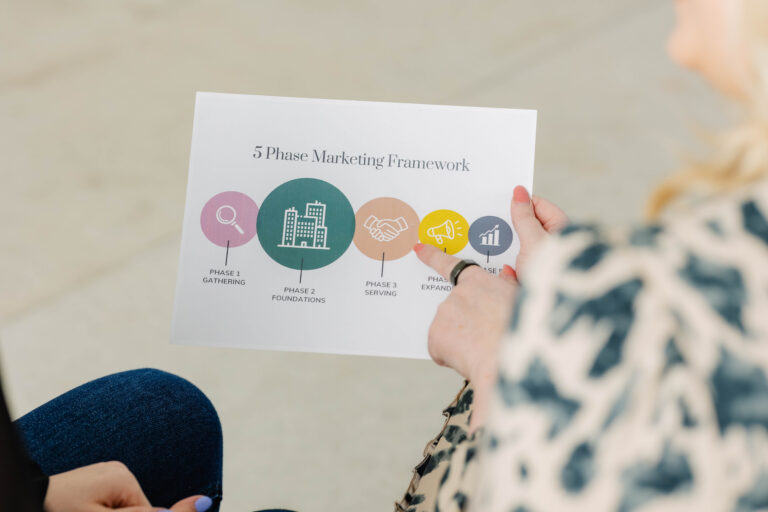
One of the reasons we’ve built our Marketing Roadmap around five distinct phases is because sustainable growth doesn’t happen all at once. Every stage serves a purpose, and each phase removes a different type of stress that business owners commonly experience.
Phase 1: Gathering Creates Clarity
The first phase focuses on understanding your business before trying to change it. This includes identifying your ideal client, clarifying your goals, evaluating your current marketing efforts, and understanding where opportunities exist.
Many business owners skip this step because they feel pressured to take action immediately. However, acting without clarity often creates more work rather than better results.
When you know who you’re trying to reach and what success actually looks like, decision-making becomes much easier. You stop chasing audiences that aren’t the right fit and begin creating marketing that speaks directly to the people you want to serve.
Clarity eliminates unnecessary work because it removes uncertainty.
Phase 2: Foundations Create Confidence
Once the direction is clear, the next step is strengthening the foundation of your marketing.
This includes refining your messaging, improving your website, creating brand consistency, and ensuring every customer touchpoint reflects the business you’ve become.
Without strong foundations, every future marketing effort requires more energy because you’re constantly compensating for weaknesses elsewhere. You find yourself explaining what your website doesn’t communicate, answering questions your messaging should already address, or trying to overcome confusion that could have been prevented.
Strong foundations reduce that friction.
Instead of reinventing your message every time you write a social media post or attend a networking event, you have a clear brand voice and a consistent message that works across every platform.
Confidence grows because your marketing finally reflects the quality of your business.
Phase 3: Relationships Create Consistency
Many businesses think marketing is about constantly finding new customers.
While attracting new people is certainly important, long-term growth is built on relationships.
Phase 3 focuses on creating consistent communication with your audience through valuable content, community engagement, email marketing, and trust-building strategies.
This is where marketing begins to feel less like selling and more like serving.
Instead of wondering how to convince people to work with you, you’re focused on educating, encouraging, and helping your audience solve real problems. That shift creates a healthier relationship with marketing because your content has purpose beyond generating immediate sales.
Consistency also reduces stress because you stop operating in cycles of panic and inactivity. Rather than marketing only when business slows down, you build habits that create steady momentum throughout the year.
Phase 4: Expansion Creates Opportunity
After the foundation is strong and relationships have been established, it’s time to expand your reach.
This is where many businesses mistakenly begin.
They invest heavily in advertising or try to grow quickly before the earlier phases are complete.
When expansion happens at the right time, however, it feels entirely different.
Instead of hoping new marketing channels will fix existing problems, you’re amplifying a system that’s already working. SEO becomes more effective because your messaging is clear. Paid advertising performs better because your website converts visitors into leads. Strategic partnerships create stronger results because your brand has established credibility.
Expansion becomes exciting instead of overwhelming because your business is ready for it.
Phase 5: Scaling Creates Freedom
The final phase is about building systems that allow your business to continue growing without requiring you to carry every responsibility yourself.
Many entrepreneurs unknowingly become the center of every marketing decision. Every piece of content requires their approval. Every customer interaction depends on their involvement. Every new idea waits for them to find the time.
That approach isn’t sustainable.
Scaling shifts the focus from dependence to systems.
Processes become documented. Marketing becomes repeatable. Team members understand the strategy. Technology supports consistency. Growth becomes less dependent on individual effort and more dependent on the strength of the business itself.
This is where sustainable business growth truly begins.
Not because you’re working harder.
Because you’ve built something that can continue growing without requiring you to do everything yourself.

Sustainable Business Growth Looks Different
There’s a common belief that successful businesses operate at a constant sprint. Social media often reinforces this idea by celebrating hustle, productivity, and endless activity. While hard work certainly has its place, sustainable businesses rarely succeed because they’re moving the fastest.
They succeed because they’re moving intentionally.
Sustainable business growth isn’t built on urgency. It’s built on consistency.
Instead of reinventing their marketing every few months, successful businesses refine what’s already working. They improve systems rather than replacing them. They build assets that continue creating value long after they’ve been published. Blog articles generate search traffic for years. Email sequences continue nurturing leads automatically. Websites convert visitors while the business owner is meeting with clients or spending time with family.
This type of growth feels different because it’s designed to compound.
Every marketing effort strengthens the next one.
Every improvement creates additional leverage.
Every system reduces future workload.
That doesn’t mean growth becomes effortless. It means your effort becomes increasingly efficient.
A marketing roadmap helps create this kind of sustainability because every phase is designed to support the next. Instead of constantly rebuilding, you’re continuously strengthening what already exists.
Over time, that creates a business that’s easier to market, easier to manage, and far less exhausting to grow.
You Don’t Need to Be Everywhere
One of the biggest contributors to marketing burnout is the belief that successful businesses must maintain a presence on every platform.
It’s an understandable assumption. Everywhere you look, someone is promoting a new social media app, a new advertising strategy, or another communication channel that’s supposedly essential for growth.
The result is that business owners begin measuring success by how many places they show up instead of how effectively they’re showing up.
The truth is that your audience isn’t everywhere.
They’re somewhere.
A marketing roadmap helps you identify where that “somewhere” is.
Instead of dividing your attention across every available platform, you begin focusing on the channels that make the most sense for your business, your audience, and your goals. That focus allows you to create higher-quality content, build stronger relationships, and use your time more intentionally.
If your marketing constantly feels overwhelming, it may not be because you’re doing too little.
It may be because you’re trying to do too much.
Some common signs that your marketing strategy may be contributing to burnout include:
- You constantly wonder what you should post next.
- Every new marketing trend feels urgent.
- Your marketing stops whenever business gets busy.
- You feel guilty when you’re not creating content.
- You’re active on multiple platforms but aren’t sure which ones generate leads.
- Your marketing feels reactive instead of intentional.
These experiences are incredibly common among growing businesses. They don’t mean you’re doing a poor job. They simply indicate that your business may have outgrown a collection of tactics and is ready for a more strategic framework.
A marketing roadmap doesn’t ask you to do everything.
It helps you identify what matters most, so you can confidently let go of everything that doesn’t.
Marketing Should Create Freedom, Not Exhaustion
One of the greatest misconceptions about entrepreneurship is that success requires constant hustle. We celebrate long hours, packed calendars, and the ability to wear every hat. While dedication is certainly part of building a business, there comes a point when working harder no longer produces better results. Instead, it produces diminishing returns.
Marketing is often one of the first areas where this becomes apparent.
Business owners begin spending more time creating content, managing platforms, responding to trends, and trying to stay visible than they do serving their clients or leading their businesses. The very marketing activities intended to generate growth begin consuming the time and energy needed to sustain that growth.
That isn’t the purpose of marketing.
Marketing should create opportunities, not obligations.
It should help people discover your business, understand the value you provide, and feel confident taking the next step. It should support your business behind the scenes rather than demanding your attention every waking hour.
A strong marketing roadmap makes this possible because it replaces constant urgency with intentional systems. Instead of treating every day like a race to keep up, you begin building marketing assets that continue working long after you’ve created them. A well-written blog continues attracting organic traffic for months or even years. An optimized website answers common questions while you’re serving clients. An email nurture sequence builds trust automatically. Search engine optimization compounds over time, creating visibility without requiring daily effort.
This is the kind of marketing that creates freedom.
Not because you’re doing less, but because the work you’re doing has a lasting impact.
Building a Business That Doesn’t Depend on You for Every Marketing Decision
One of the defining characteristics of a healthy business is that it becomes less dependent on the owner over time.
In the early stages, it’s natural for the business owner to make every decision. You’re learning, experimenting, and discovering what works. But as the business grows, continuing to personally manage every aspect of marketing becomes increasingly difficult.
Many business owners unknowingly become the bottleneck.
Every social media post waits for approval. Every email requires revisions. Every new idea depends on finding a few extra hours in an already full schedule. Even if you eventually hire help, the team often can’t move forward without constant direction because the strategy exists only in your head.
A marketing roadmap changes that.
When your marketing strategy is documented, priorities are clear, and messaging is consistent, delegation becomes much easier. Team members understand the purpose behind the work instead of simply completing individual tasks. Designers know what the brand should communicate. Copywriters understand the voice. Marketing coordinators know which initiatives deserve attention and which ones don’t.
Instead of managing every detail, you begin leading the strategy.
That transition creates one of the most valuable forms of growth any business can experience.
It creates capacity.
Capacity to serve more clients.
Capacity to develop new services.
Capacity to strengthen your company culture.
Capacity to spend more time with your family or simply enjoy the business you’ve worked so hard to build.
This is what sustainable business growth looks like.
Not a business that demands more of you every year, but one that becomes stronger because you’ve built systems that support its continued success.
The Most Successful Businesses Don’t Grow by Accident
When people look at successful businesses from the outside, they often assume growth happened naturally.
They see a polished brand, an active online presence, strong search rankings, loyal customers, and a steady stream of referrals. What they don’t see are the intentional decisions that created those results over time.
Behind every successful business is a series of strategic choices.
Choosing who to serve.
Choosing what to say.
Choosing where to invest.
Choosing what not to pursue.
Those decisions rarely happen by accident.
They’re guided by a clear vision and a thoughtful plan.
That’s exactly what a marketing roadmap provides.
Rather than chasing every opportunity that appears, you begin evaluating opportunities through the lens of your long-term goals. Instead of asking whether something is popular, you ask whether it aligns with your business growth strategy. Instead of reacting to every marketing trend, you focus on the activities that consistently move your business forward.
This level of intentionality doesn’t just improve marketing performance.
It creates peace of mind.
When you know why you’re making each decision, uncertainty begins to fade. Marketing becomes less emotional because you’re no longer relying on hope or guesswork. You’re following a strategy designed specifically for your business.
That confidence is one of the greatest returns a marketing roadmap can provide.
Growth Feels Different When You Have a Plan
Think back to the last time you took a road trip to somewhere unfamiliar.
Without directions, every intersection requires a decision. Every turn creates uncertainty. You constantly wonder if you’ve missed something or taken the wrong route. Even when you’re moving, you don’t necessarily feel confident that you’re moving in the right direction.
Now imagine making the same trip with a reliable GPS.
The destination hasn’t changed.
The roads haven’t changed.
But your experience is completely different.
You know where you’re going.
You understand what’s coming next.
If a detour appears, you know how to adjust without panicking because the overall route is still clear.
A marketing roadmap provides that same sense of direction for your business.
Challenges will still arise. Markets will continue evolving. Algorithms will change. Customer behaviors will shift. But instead of reacting emotionally to every obstacle, you’ll have a strategic framework that helps you adapt while continuing toward your long-term goals.
That confidence allows you to enjoy the journey instead of constantly worrying about whether you’re headed in the right direction.
Build a Business That Grows With You
The goal of entrepreneurship was never to become overwhelmed by your own marketing.
You started your business because you wanted to make an impact, solve meaningful problems, and create something that reflected your passion and expertise. Marketing should support that mission—not distract you from it.
A marketing roadmap provides more than a list of recommendations. It creates clarity. It helps you understand where your business is today, where you want to go next, and the most effective path to get there. Instead of feeling like you’re constantly reacting, you begin making intentional decisions that support sustainable business growth.
If your marketing feels heavier than it should, constantly demands your attention, or leaves you wondering what to do next, it may be time to stop adding more tactics and start building a stronger strategy.
Our Marketing Roadmap Session is designed to help you evaluate your current marketing, identify what’s creating unnecessary friction, and build a customized plan that supports your goals, your audience, and your capacity. Together, we’ll create a strategy that allows your marketing to become a tool for growth instead of a source of burnout.
If you’re ready to grow your business with greater clarity, confidence, and purpose, book your Marketing Roadmap session today. Let’s build a strategy that supports sustainable business growth while giving you the freedom to focus on what you do best.